Application
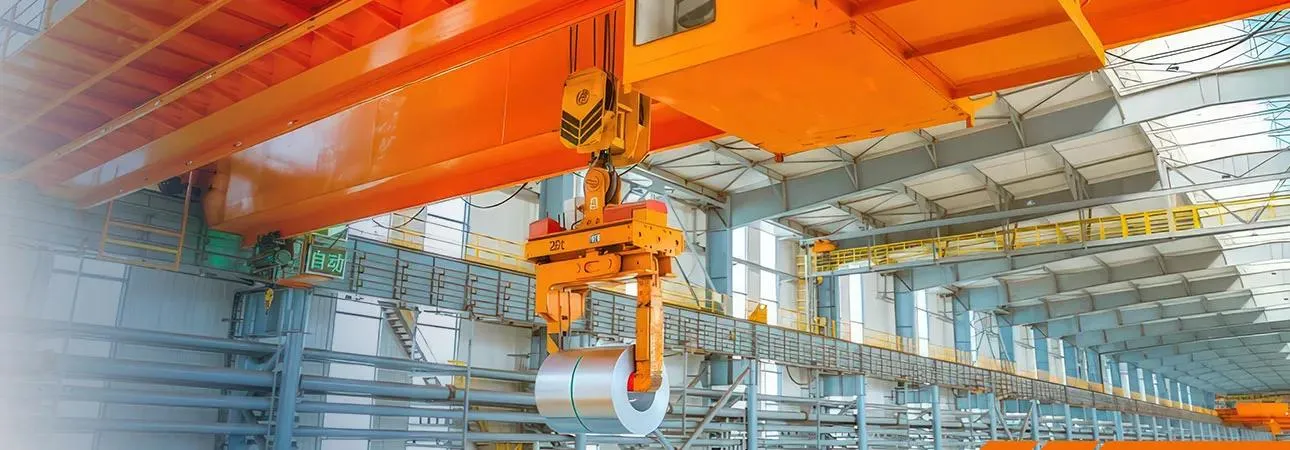
Modern port terminals operate under sustained pressure to move more cargo, faster, with fewer operational incidents, and at lower cost per TEU or tonne handled. The vessels calling at major terminals are larger than a decade ago. Cargo volumes continue to grow. Vessel turnaround time expectations tighten as shipping lines optimize their schedules. And the labor, energy, and infrastructure costs of running a terminal are increasingly visible in operators’ financial planning.
Port cargo handling refers to the processes and equipment used to load, unload, transfer, store, and manage cargo in marine terminals. Modern port cargo handling solutions rely on advanced cranes and automation technologies to improve efficiency, safety, and operational reliability.
This page covers the primary cargo handling challenges facing port operators, the crane and equipment solutions that address them, and the selection considerations that determine which configuration is right for each terminal type and application.
Port cargo handling is the complete set of operational activities and equipment systems involved in moving cargo between vessels and the terminal, storing it within the terminal yard, and transferring it to landside transportation — road, rail, or pipeline. It covers every stage from the moment a container or bulk cargo is lifted from a ship's hold to the point it leaves the terminal gate.
Effective port cargo handling systems coordinate crane operations, horizontal transport, yard storage, and gate management into a unified workflow that maximizes throughput while maintaining safety, minimizing vessel time at berth, and keeping landside transport waiting times within acceptable limits.
| Equipment | Main Application |
|---|---|
| Ship-to-Shore (STS) crane | Vessel loading and unloading at quayside berth |
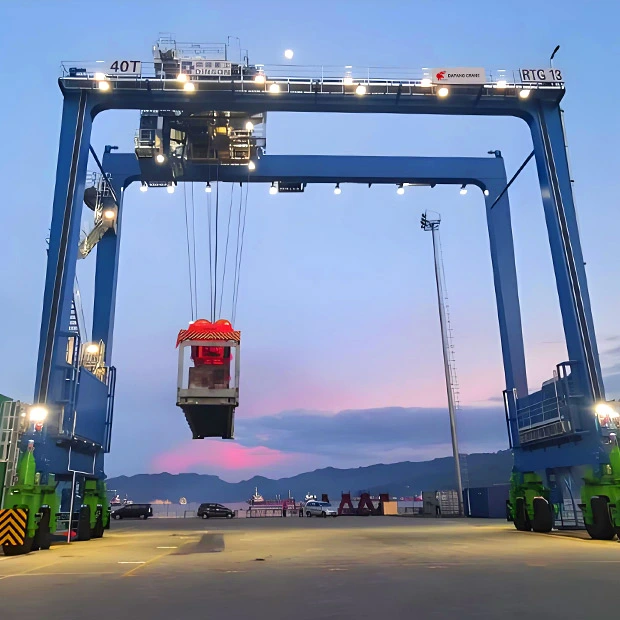
| RTG crane | Flexible rubber-tire container yard stacking and retrieval |
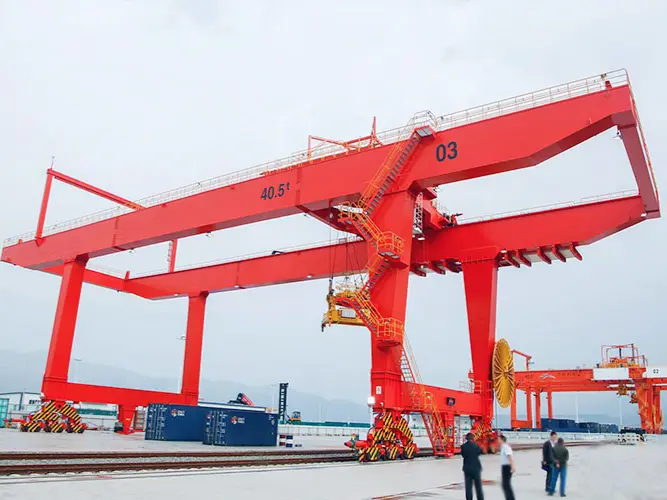
| RMG crane | Rail-mounted high-density and automated container stacking |
| Harbor crane | Multipurpose cargo handling — containers, bulk, general cargo |
| Floating crane | Deep-water lifting, offshore project cargo, vessel-to-vessel transfer |
| Grab bucket system | Bulk cargo unloading — coal, ore, grain, fertilizer |
Container terminals require an integrated system of quayside cranes, horizontal transport, and yard cranes working in coordination to achieve the throughput and turnaround performance that vessel schedules demand. No single piece of equipment determines terminal productivity — the weakest link in the chain constrains the whole system.
The STS crane — also called a quay crane — is the primary quayside lifting system for container vessel loading and unloading. It spans the vessel at berth, with the boom extending over the ship to reach all container bays across the full vessel width. Modern STS cranes for ultra-large container vessels have outreach of 65 to 75 meters and lifting heights above quay of 45 to 55 meters — structural dimensions that reflect the scale of the largest container ships in current service.
The crane trolley travels along the boom, lowering the spreader into the vessel's hold to lift containers and transferring them to the quay level for handoff to horizontal transport. Twin-lift spreader systems — handling two 20-foot containers simultaneously — are standard on high-productivity STS cranes, effectively doubling the productivity of each crane cycle when cargo mix permits.
Productive rates of 30 to 40 container moves per crane per hour are achievable at well-managed terminals with optimized vessel bay planning and coordinated horizontal transport. For a vessel requiring 3,000 crane moves, the difference between 25 and 35 moves per crane hour — with two cranes — is more than two hours of vessel time. At the berth occupancy rates and vessel call volumes of major terminals, this productivity difference has direct commercial significance.
Rubber Tyred Gantry cranes manage container storage in the yard — receiving containers from horizontal transport at the block end, stacking them within the block to heights of 4 to 6 containers, and retrieving them for landside handoff when collected. The RTG crane travels along the container block on rubber tires, with the gantry spanning the full block width plus one or two truck lanes for landside vehicle access.
The mobility of RTG cranes — the ability to drive between blocks on rubber tires — gives terminal operators flexibility to reallocate crane capacity as yard demand shifts. A block with elevated retrieval demand receives an additional crane; a quieter zone operates with fewer machines. This reallocation capability, unavailable with rail-mounted equipment, is the primary operational advantage of RTG systems.
Electric RTG configurations — powered via cable reel connection to shore power — eliminate diesel engine operation during yard work, reducing emissions and long-term fuel costs. Diesel-electric hybrids with regenerative energy recovery during load lowering cycles achieve fuel savings of 30 to 50% compared to conventional diesel-hydraulic drive.
Rail Mounted Gantry cranes travel on precision steel rails within fixed container storage blocks. The rail guidance system provides positioning accuracy that rubber tire systems cannot match — a fundamental requirement for fully automated operation where spreader landing on container corner castings must occur consistently without manual correction.
Automated RMG systems — also called Automated Stacking Cranes (ASC) — receive stack assignments from the terminal management system, execute moves autonomously, and report completion. A remote monitoring center provides oversight without cab-based operators on each crane. This operational model reduces direct labor cost per container move and delivers consistent crane productivity across all shifts, independent of operator skill or shift handover variability.
RMG cranes can stack containers higher than RTG designs — up to 8 or 9 containers in some automated terminal configurations — improving TEU density per unit of yard area. For terminals in space-constrained locations where yard expansion is not possible, the density advantage of automated RMG systems directly increases terminal handling capacity without additional land.
Bulk cargo — coal, iron ore, grain, fertilizer, limestone, bauxite — requires different handling equipment from container terminals. The key performance metrics are tonnes per hour for discharge and loading, and the ability to handle materials with different densities, particle sizes, moisture contents, and handling requirements.
Grab cranes are the standard unloading system for bulk vessels at terminal berths. A crane — typically a harbor crane or a purpose-built bulk unloader — is equipped with a grab bucket that opens over the cargo hold, closes to capture a volume of bulk material, and hoists it clear of the vessel for transfer to a conveyor, hopper, or storage area.
Rope grab buckets use wire rope through a pulley block system to open and close the shells. They are the standard configuration for high-cycle port bulk handling — mechanically simple, reliable in demanding environments, and compatible with standard crane hoist systems. Four-rope designs on large harbor cranes achieve the highest throughput rates for coal, ore, and grain unloading.
Hydraulic grab buckets use independent hydraulic cylinder actuation for shell closing, providing stronger and more precisely controlled closing force. They are preferred for materials that require higher closing force — compacted or partially consolidated cargo — or for applications where independent shell control at any hoist position improves operational performance.
Grab selection depends on material bulk density, particle size, moisture content, and the throughput rate the terminal requires. A correctly matched grab bucket and crane combination delivers consistent fill factor — the proportion of the grab's geometric volume occupied by material on each cycle — which is the primary determinant of bulk unloading throughput.
Mobile harbor cranes — rail-mounted or rubber-tired units positioned at the berth — are the most flexible port crane configuration. They handle containers with spreader attachments, bulk cargo with grab bucket attachments, and general cargo with hook configurations — often interchanging between cargo types within the same vessel call.
For terminals handling mixed cargo types, a mobile harbor crane fleet provides the versatility to match equipment to cargo without dedicated fixed infrastructure for each cargo category. For smaller ports and terminals that cannot justify the capital investment of dedicated STS cranes or fixed gantry unloaders, mobile harbor cranes provide adequate productivity across a range of cargo types with lower initial infrastructure requirements.
Modern harbor cranes use VFD drive systems on all motions, anti-sway control systems, and load monitoring — delivering positioning accuracy and operational safety that older hydraulic or contactor-based designs cannot match.
Dafang Crane provides customized port cargo handling solutions for container terminals, bulk terminals, multipurpose terminals, and marine logistics applications — covering the full range of crane systems and equipment types that modern port operations require.
Dafang's container terminal equipment covers RTG cranes for flexible yard operations — available in diesel-electric and full electric configurations — and RMG cranes for rail-mounted high-density and automated stacking applications. Container gantry crane configurations are engineered to terminal-specific span, stacking height, and automation requirements rather than constrained to catalogue options.
VFD drive systems on all motions, anti-sway control, semi-automatic spreader landing, and terminal management system integration are standard features on Dafang container crane systems. For terminals pursuing automation, Dafang's RMG and automated stacking crane configurations support full unmanned operation with remote monitoring center oversight.
Dafang's bulk cargo handling range covers rope grab buckets and hydraulic grab buckets in configurations matched to the specific material, crane system, and throughput requirement of each terminal application. Grab bucket capacity, shell geometry, cutting edge specification, and closing force are all defined from the operational requirements rather than selected from standard sizes.
Harbor crane configurations with grab bucket attachments provide multipurpose bulk and general cargo handling capability for terminals where operational flexibility across cargo types is the priority.
Dafang's marine lifting range covers marine travel lifts for marina and boatyard vessel handling — from compact 15-ton systems for small recreational vessel facilities to heavy-duty 500-ton configurations for naval maintenance bases — marine deck cranes for vessel-mounted cargo handling, and boat hoist crane systems for inland waterway and fishing port applications.
Marine equipment is engineered to the specific environmental requirements of coastal and offshore operation: marine-grade corrosion protection systems, sealed electrical enclosures rated for saltwater exposure, stainless steel hardware at critical connection points, and structural wind resistance confirmation for exposed coastal positions.
Every port cargo handling project begins with terminal requirement analysis: cargo type and volume, vessel size and call frequency, yard layout and available area, automation objectives, environmental conditions, and regulatory requirements. Dafang's engineering team develops the crane configuration, capacity specification, and infrastructure requirements from this operational basis — providing a solution engineered for the terminal's actual conditions rather than adapted from a standard product.
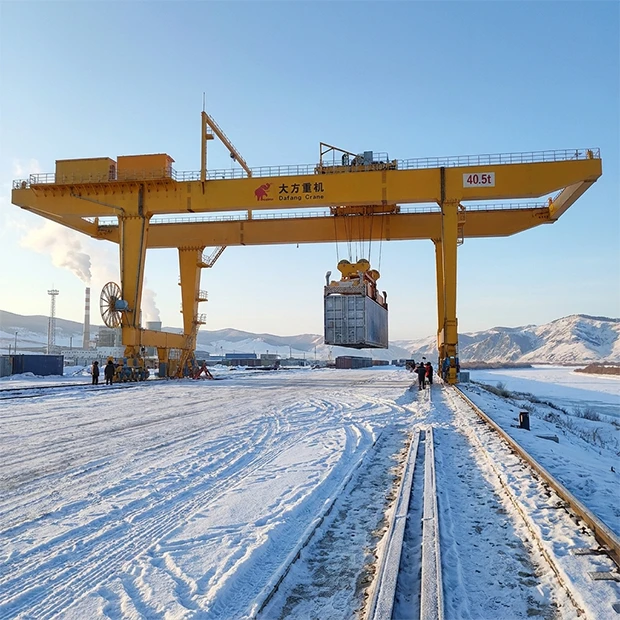
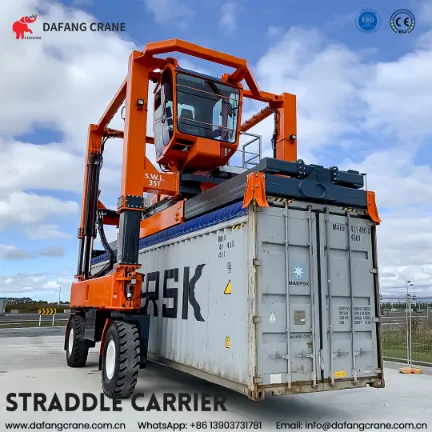
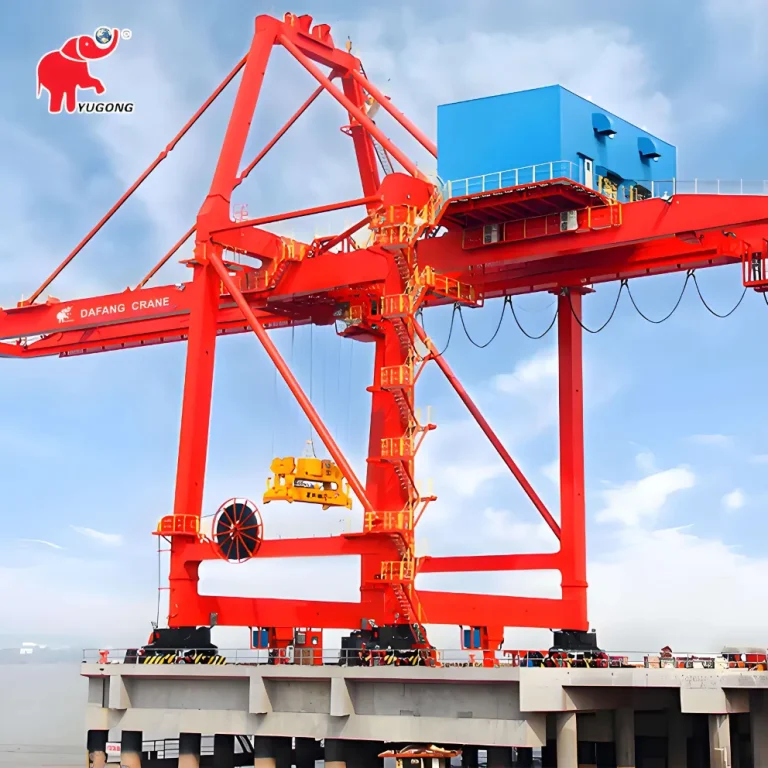
Port cargo handling refers to the processes and equipment used to load, unload, transfer, store, and manage cargo in marine terminals.
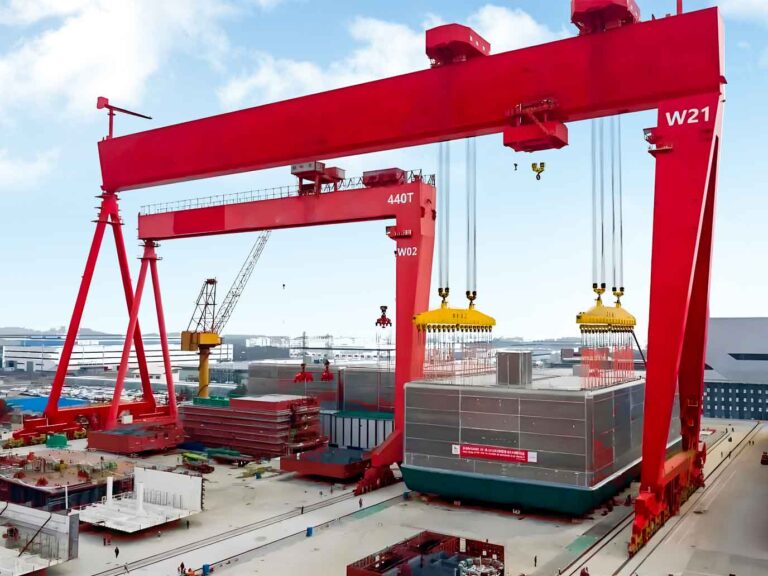
A Shipbuilding Gantry Crane is a heavy-duty lifting system designed for shipyards to transport and assemble large ship blocks.
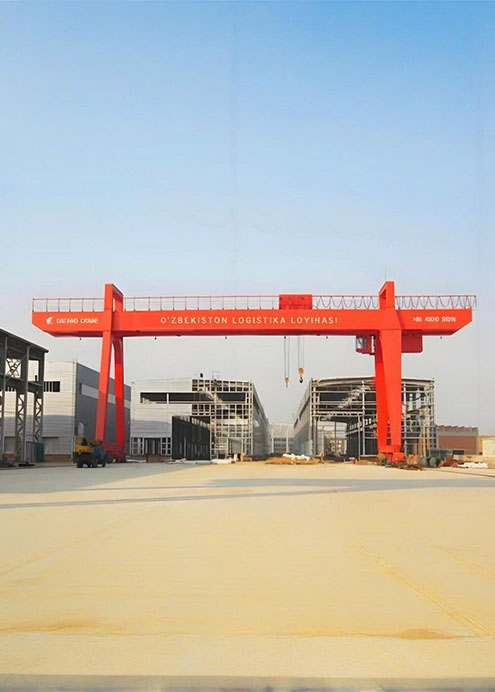
On the construction site of large-scale construction project